Week 6 of 8 · Still Becoming
Sunday gave us the truth: every Becomer is a minister. Our table time was shorter than we hoped, so this week we will take that conversation home. Each morning trains one part of our ministry eyesight: notice someone, see what God placed in your hands, and let love take a practical form.
“God has given each of you a gift from his great variety of spiritual gifts. Use them well to serve one another.”
Peter does not begin with the strongest, youngest, wealthiest, or most visible person. He says each of you. Then he tells us where the gift came from and whom it is for. It was received from God, and it becomes stewardship when it serves another person.
That means ministry is not a department of the church. It is God's grace taking practical form through ordinary people. It can look like prayer, a ride, a meal, a phone call, a card, wise experience, quiet listening, a Scripture remembered at the right moment, or the humility to let somebody help you.
This is not a test of your usefulness. You are beloved before you are useful, and your value does not rise or fall with what you can do today. But grace was never meant to stop with you. Somewhere in your life is a way God's kindness already knows how to travel through you.
Carry it
I have grace to share.
Pray it: Lord Jesus, thank You for loving me before I could do anything for You. Open my eyes to the grace You have placed in me, especially ____________.
Practice it: Ask two questions: What do people naturally ask me for? and What need do I notice quickly? Write down one answer. That may be a clue to grace God loves to share through you.
Three passages answer the same question: who does ministry, where does the ability come from, and what is it meant to build?
Ask the textAcross all three passages, who receives a gift, where does it come from, and who is supposed to benefit?
Want the whole picture? Read 1 Peter 4:7-11 ↗ straight through.
“Well done, my good and faithful servant. You have been faithful in handling this small amount.”
In Jesus' story, the servants do not receive the same amount. The master does not ask them to become identical; he asks them to become faithful with what was entrusted to them. A talent in this story was money, not a modern skill, but the stewardship question reaches every part of life: What has God placed in my hands, and how can love use it?
Look beyond the impressive things. Your hands may hold a phone, a recipe, an extra chair, a car, a free afternoon, a listening ear, a lifetime of experience, a testimony, a relationship, or a few dollars already assigned to something ordinary. The disciples saw five loaves and two fish and called it too little. Jesus saw something that could be blessed, shared, and multiplied.
Faithfulness does not begin when you have more. It begins when you offer what is already there. This is a response to grace, not a way to earn God's love.

Carry it
Start with what God placed in your hands.
Pray it: Father, keep me from dismissing what looks ordinary. Show me how what I already have could bless ____________.
Practice it: Choose one resource already in your hands and pair it with one person or need. Keep the step small enough to complete this week.
Notice how often God begins with something ordinary that a person is willing to offer.
Ask the textWhat changes in each story after an ordinary thing is placed in God's hands?
Want the whole picture? Read Matthew 25:14-30 ↗ straight through.
“They shared their meals with great joy and generosity.”
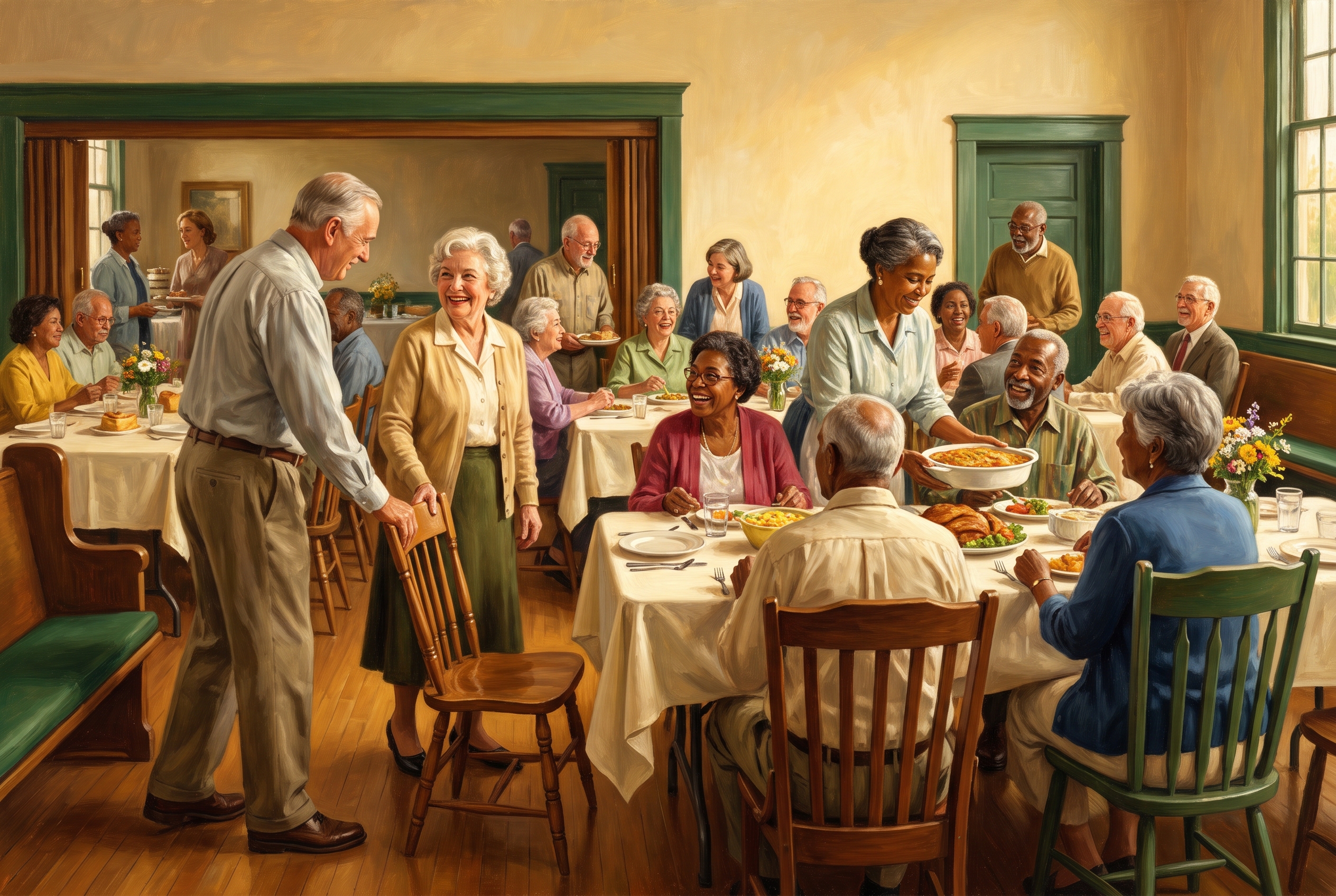
After Becomers, a small group may go to a restaurant. That is good. People eat, talk, and build friendship. But we are going to eat anyway, and we are going to pay for that meal anyway. What if some of the same money and effort became hospitality for a wider table?
The goal is not to spend more or to shame anyone for going out. It is to ask whether the same gift could carry more love. A meal that once gathered six people might help thirty people stay, talk, and belong. A visitor does not have to wonder whether the restaurant is affordable. Someone who came alone does not have to eat alone. A generous cook can offer their gift without quietly carrying every ingredient cost.
Stewardship is not only about saving dollars. It is about multiplying what love can do with them. There are no merely operational dollars when the operation itself carries love.
Carry it
Don't spend more. Let the same money love more people.
Pray it: God of abundance, teach me to see beyond what something costs to whom it could include. Widen my table for ____________.
Practice it: Name one thing you were already going to do or pay for this week: a meal, errand, drive, call, or gathering. Ask how it could include or bless one more person.
Food becomes ministry throughout Scripture when it moves from possession to shared presence.
Ask the textWhat changes when food moves from something I possess to something we share in God's presence?
Want the whole picture? Read Acts 2:42-47 ↗ straight through.
“If one part suffers, all the parts suffer with it, and if one part is honored, all the parts are glad.”
Some of us know how to give but do not know how to receive. We can bring the meal, make the call, offer the ride, and pray for everybody else. But when help comes toward us, we say, I don't want to be a bother.
The body of Christ has no permanent class of helpers and no permanent class of people who need help. At different times every part gives, every part receives, and every part belongs. When Peter tried to refuse Jesus' towel and basin, Jesus taught him that discipleship includes receiving what grace provides.
Accepting a ride, a meal, a prayer, a listening ear, or appropriate help does not reduce your dignity. It gives another person's gift somewhere to land. Receiving never requires you to ignore wisdom, privacy, or healthy boundaries. It simply means need is not failure and gratitude is not weakness.

Carry it
Ministry has two hands: one to give and one to receive.
Pray it: Lord Jesus, free me from pride on either side of love. Give me grace to offer what I have and receive what I need, especially ____________.
Practice it: Use either hand today. Offer one appropriate help, accept one offered kindness, or ask one trusted person to pray. Either hand counts.
These passages show that Christian care is mutual, embodied, and received as well as given.
Ask the textWhat would Peter and the body have missed if everyone insisted on being only the giver?
Want the whole picture? Read 1 Corinthians 12:12-27 ↗ straight through.
“Let's not merely say that we love each other; let us show the truth by our actions.”
A ministry idea becomes ministry when love takes a next step. Not a grand plan. Not somebody should. A person, an act, and a time.
This is the table conversation we did not have enough time to finish Sunday. The good news is that you do not need a table worksheet to answer it. Ask God for one person already within reach. Then choose something concrete: call after the appointment, bring a portion of the meal, offer the ride, send the card, sit beside the newcomer, ask for prayer, or follow up on the name everybody else forgot.
Small and completed is better than large and forgotten. You are not promising to solve a life. You are agreeing to carry one piece of Christ's love toward one person this week.

Carry it
One person. One act. This week.
Pray it: Lord Jesus, You loved me with more than words. The person You are placing on my heart is ____________. Show me the next loving action.
Practice it: Finish this sentence: For ____________, I will ____________ by ____________. Put it on your calendar. Then use the response button below to share it, send a ministry idea, or ask for prayer.
Jesus-Sighting: When love takes that step, watch for Jesus in the giving and in the receiving.
Look for the verbs. Biblical love notices, moves, gives, carries, persists, and acts.
Ask the textWhich verbs move love from a good intention into something another person can actually receive?
Want the whole picture? Read 1 John 3:16-18 ↗ straight through.
One simple reply
One sentence is enough. This is an invitation, not a report card.
Send one person + one act, a ministry idea, or a prayer request. Example: Mary: I will call after her appointment Tuesday.
Protect privacy: use a first name or initials only. For anything sensitive, write Please call me instead of including details. If reaching out would be unsafe, prayer fully counts.
Still Becoming · Every Becomer Is a Minister · 1 Peter 4:10
Notice someone. Move toward them in love. Use what God has entrusted to you.
With love,
Brian & Carolyn